
Current Research at Kemp
Kemp Station supports two long-term research projects on it’s property:
Long-term Bat Monitoring Station

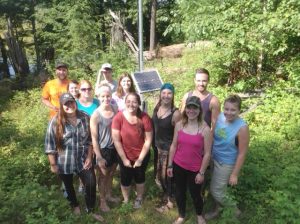
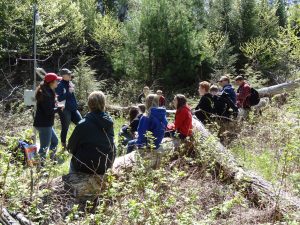
In 2007 WDNR Bat Ecologist, David Redell, and his colleague, Paul White, installed a bat monitoring station at Kemp Station. It is located near the lake, at the edge of an area known as “the blowdown,” a large forest clearing created by the windstorm in August 2000. Housed in the monitoring station is an acoustic recording system capable of detecting the echolocation calls bats make as hunt for food. The bat monitoring station detects and records these acoustic signals as the bats fly by and records the date and time of each bat pass. Data is submitted to the WDNR each month. Read more….
Deer Exclosures
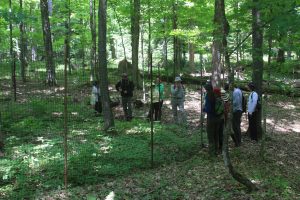
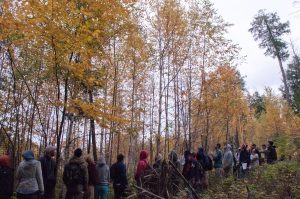
In 2002, 10 deer exclosures were erected on Kemp Station property. The exclosures demonstrate the long-term impact of deer herbivory on plant communities. They are a valuable teaching resource and are visited regularly by field classes from various universities. One of the exclosures is incorporated into Kemp’s interpretive nature trail.
In addition, each year, Kemp Station supports numerous research projects on a variety of topics related to Wisconsin’s natural resources. The list below shows projects, project leaders and their associations for the current calendar year. Projects are added to this list throughout the year.
| Project Title | Name | Department & University or Agency |
|---|---|---|
| Winter Dynamics of Belowground Biophysical Processes in Temperate Forest Soils in Wisconsin, USA | Balster, N. (Igirimbabazi, D.) | UW-Madison, Soils and Environmental Sciences |
| KNRS Deer Exclosures: Evaluation of Ecological Impacts | Bowe, S. | UW-Madison, Kemp Natural Resources Station |
| Understanding Kiln Drying Capacity in the Lake States | Bowe, S. | UW-Madison, Forest and Wildlife Ecology |
| Applications for engineered hardwoods for truck trailer decking | Bowe, S. | UW-Madison, Forest and Wildlife Ecology |
| How Established and Underutilized Wood Species are Perceived: Perspectives from Wisconsin Consumers | Bowe, S. | UW-Madison, Forest and Wildlife Ecology |
| Stain in Hardwood Lumber: Causes, Prevention, and Impact | Bowe, S. | UW-Madison, Forest and Wildlife Ecology |
| Physiological Responses of Five Important Pine Species to Inform Forest Assisted Migration in the Great Lakes Region, U.S.A. | Bronson, D. | US Forest Service, Northern Research Station |
| Chequamegon Ecosystem-Atmosphere Study Core Site Cluster | Desai, A. | UW-Madison, Atmospheric and Oceanic Sciences |
| USFS National Visitor Use Monitoring Program | Ferguson, M. | University of New Hampshire, Dept of Recreation Management and Policy |
| Excess mortality in rural America | Jones, M. | UW-Madison, Community & Environmental Sociology |
| How do climates adapted to microbial communities enhance the climate tolerance of trees? | Lankau, R. | UW-Madison, Plant and Agroecosystem Sciences |
| Restoration of soil biodiversity and ecosystem function after agricultural legacies | Lankau, R. (Matus, V.) | UW-Madison, Plant and Agroecosystem Sciences |
| Northern Pine Management Initiative | Meunier, J. | Wisconsin Department of Natural Resources |
| Analysis of threats by invasive insect pests | Raffa, K. | UW-Madison, Entomology |
| Managed Old-growth Silvicultural Study | Razenkova, E. | Wisconsin Department of Natural Resources |
| Balancing Waterfowl and Wild Rice: Research to Inform Management and Restoration | Shipley, A. | Wisconsin Department of Natural Resources |
| NEON Great Lakes Domain Ecological Monitoring | Spink, A. | NEON Great Lakes Domain |
| Wisconet | Wienkes, C. | UW-Madison, Plant and Agroecosystem Sciences |
| Long-Term Bat Monitoring Station | White, J. Paul | Wisconsin Department of Natural Resources |